7 Beginner Pilates Classes for Men Starting Fresh

Last Updated: October 25, 2026
Quick Summary
Beginner pilates classes men take build strength without joint stress by using springs and body weight to create resistance that demands precision and control. Classes typically run 45 to 60 minutes and work best when attended two times per week for noticeable results.
Mat Pilates uses body weight alone while Reformer Pilates adds springs and adjustable resistance, making reformer ideal for beginners learning proper form.
Arrive 10 to 15 minutes early to discuss injuries with your instructor and allow time for equipment setup before your first class.
Expect mild soreness in your core, hips, and upper back for the first week or two as your body adapts to the new movement patterns.
Two sessions per week is the practical minimum for noticeable change; three sessions per week is better if your recovery allows it.
Wear fitted, moisture-wicking clothing and go barefoot or wear grip socks to allow your instructor to see your alignment and improve proprioception.
Table of Contents
Why Beginner Pilates Classes Work for Men
Reformer Pilates for Beginners: Mat Versus Equipment
What to Wear to Pilates and What to Bring
Beginner Pilates Exercises and Modifications
First Pilates Class Tips: What to Expect and How to Prepare
Before you arrive: the first-class checklist
What happens in the first 10 minutes
What the class itself feels like
Men-specific expectations
The day after
Choosing the Right Class Format and Frequency
Match the format to your goal
Compare the formats on the criteria that matter
A simple decision path
Frequency: what the schedule should look like
Budget reality check
Book Your First Class at FLX FLO Pilates
Why Beginner Pilates Classes Work for Men
Beginner pilates classes men take build strength without the joint stress of heavy lifting.
Pilates demands precision and control.
The mind-body connection is practical, not mystical. Focusing on alignment and deep core activation builds sustainable strength instead of grinding through repetitive motions.
Beginner pilates classes for men typically run 45 to 60 minutes, enough to warm up, work through a full-body sequence, and finish strong.
Reformer Pilates for Beginners: Mat Versus Equipment
Mat Pilates uses your body weight. Learn more about beginner reformer classes in Red Bank to compare options and find the right fit for you. Reformer Pilates adds springs and a moving carriage.
Mat Pilates is accessible, just a floor and your willingness to show up. It's harder than it looks because no machine helps you, so stabilizer muscles work overtime.
Reformer Pilates gives you feedback.
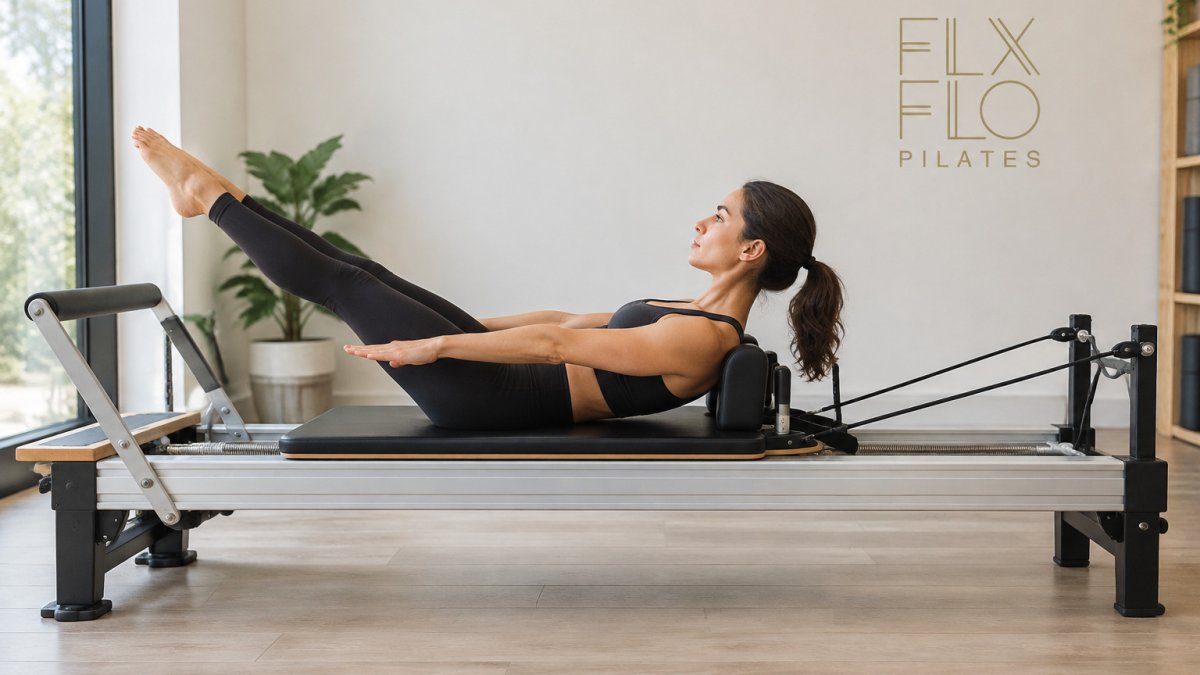
Beginner Pilates exercises on the reformer start with basic movements: footwork, leg springs, arm springs.
The equipment also forces good form. You can't cheat on a reformer the way you might on a mat. The springs keep you honest.
What to Wear to Pilates and What to Bring
Wear fitted clothing. Loose clothes hide what your body is actually doing. You want to see your alignment.
A t-shirt and athletic shorts work fine, as do joggers or Pilates-specific pants.
Shoes are optional. Most studios ask you to go barefoot or wear grip socks.
Here's what to bring:
A water bottle (you'll sweat more than you expect)
A towel (optional, but nice for the reformer)
An open mind (seriously, Pilates surprises most beginners)
Don't bring your phone. Pilates demands focus, that's part of why it works.
Arrive 10 minutes early to meet your instructor, discuss injuries or limitations, and see the equipment. First-timers who rush feel lost; those who arrive early feel confident.
Beginner Pilates Exercises and Modifications
Footwork is where most reformer classes start. Your feet press against a platform. Springs provide resistance.
The Hundred is a classic mat exercise.
Feet in Straps on the reformer let you work your legs against resistance.
Hands in Straps build shoulder and chest strength.
The pattern in every exercise is the same: alignment first, then movement, then breathing.
Modifications aren't failures. They're smart training.
First Pilates Class Tips: What to Expect and How to Prepare
Most beginner guides tell you to relax. That is not useful. Here is what actually happens in a first class, plus a checklist so you walk in prepared rather than guessing.
Before you arrive: the first-class checklist
Book the right class. Confirm it is labeled beginner or intro. A mixed-level reformer class will move faster than you want on day one.
Arrive 10 to 15 minutes early. You need time for the intake conversation and equipment setup. Rushing is the most common reason first-timers feel lost.
Know your injury history. Be ready to name any past injury, surgery, or chronic issue, shoulder, lower back, knee, hip, even if it feels minor. The instructor uses that information to choose modifications. (Source: the benefits of core strength training)
What happens in the first 10 minutes
Your instructor will ask about injuries, goals, and prior movement experience. Answer honestly; "I sit at a desk all day and my lower back gets tight" is exactly the kind of information they need. They will then set up your equipment, spring tension, foot bar position, strap length, headrest height on a reformer, or mat and props for mat work.
What the class itself feels like
Expect to use muscles you did not know you had, especially the deep stabilizers around your spine and hips. Movements feel slower and smaller than lifting weights, your instructor cues breathing constantly (inhale through the nose, exhale through the mouth as you exert), and you will be corrected, that is the point of a beginner class, not a sign you are failing.
A common pattern for male beginners is that the first class feels mentally demanding rather than physically exhausting. That is normal. You are learning coordination, not chasing a burn.
Watch Out Sharp pain is not the same as muscle fatigue. If you feel pain in a joint, the lower back, or the neck, stop and tell your instructor immediately. Soreness the next day is expected; pain during the movement is not.
Men-specific expectations
You will likely be in a mixed class. That is normal and increasingly common. Beginner classes are usually a mix of men and women, and instructors are used to teaching both.
Your hips and shoulders may feel tighter than you expect. Years of desk work and strength training shorten hip flexors and round the shoulders forward. Beginner classes address this directly, but the first few sessions may feel restricted.
Your core strength may be lower than your lifting strength suggests. Heavy lifting does not automatically train the deep core and spinal stabilizers Pilates targets. Do not be surprised if basic exercises are harder than they look.
The day after
Expect mild soreness in the core, hips, and upper back for the first week or two; it fades as your body adapts. Drink water, move gently, and don't skip the next session because of soreness, light movement usually helps. If soreness lasts more than three days or is localized to a joint, tell your instructor before the next class.
Key Takeaway The goal of your first class is not to impress anyone. It is to learn the setup, the breathing pattern, and two or three foundational exercises well enough to repeat them next time. Everything else builds from there.

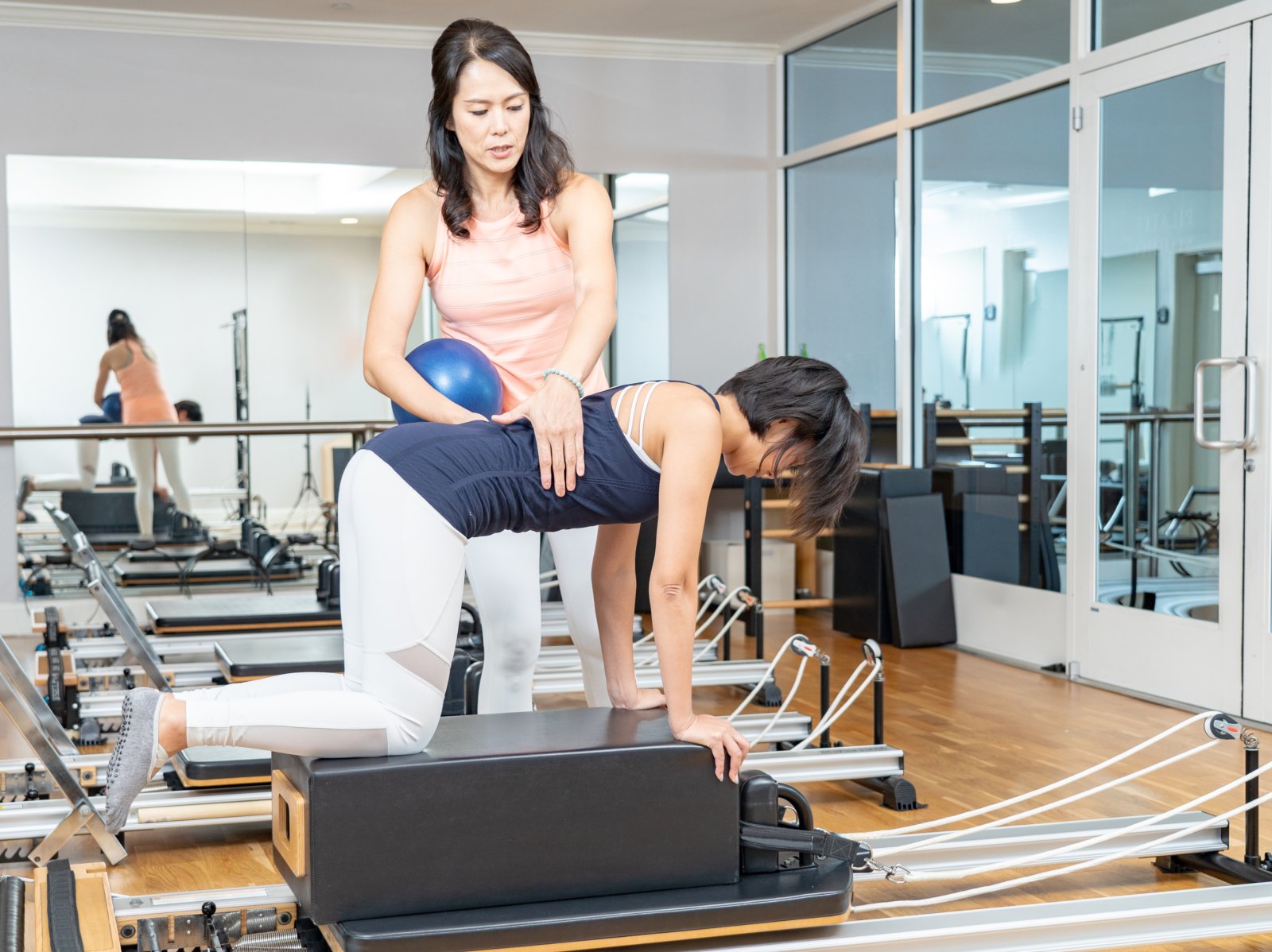
Male beginner on Pilates reformer receiving personalized form correction from instructor in bright, modern studio with natural lighting
Choosing the Right Class Format and Frequency
Most beginner guides list the formats and stop, leaving you without a way to decide. Here is a practical framework built around what actually matters for a man starting Pilates: your goal, budget, comfort level in a room, and how much correction you need.
Match the format to your goal
If your goal is general strength, posture, and mobility: start with mat or reformer group classes. You will learn the vocabulary and the breathing pattern without paying for one-on-one attention you do not yet need.
If your goal is recovering from an injury or managing a specific limitation: start with private sessions or a small-group beginner course. You need an instructor who can see your movement and modify in real time before you build habits.
If your goal is to test whether Pilates is for you: book a single beginner group class or an intro offer. Do not commit to a membership before your first session.
Compare the formats on the criteria that matter
Group classes (typically 9 to 15 people)
Cost: lowest per session.
Attention: lowest. The instructor manages the room and cannot correct every rep.
Best for: beginners who are comfortable following visual cues and want a social, structured environment.
Small-group classes (typically 3 to 8 people)
Cost: middle of the range.
Attention: high enough for individual modifications.
Best for: most male beginners. You get correction without the price of private sessions, and the smaller room reduces the "everyone is watching" feeling.
Private sessions (one-on-one)
Cost: highest per session.
Attention: complete. Every exercise is selected for your body.
Best for: injury recovery, significant posture issues, or anyone who wants to learn the fundamentals correctly the first time.
Mat versus reformer within any format
Mat is cheaper, portable, and easier to practice at home. It is harder on your stabilizers because nothing assists you.
Reformer is more adjustable and gives tangible resistance, which many men find easier to commit to. It also requires studio access.
A common beginner path is reformer classes for the first month to learn alignment with feedback, then mat work at home to reinforce it.
A simple decision path
If you have an active injury or a specific limitation, book a private session or a beginner course first.
If you are healthy but unsure, book one small-group beginner class.
If you like it, commit to two sessions per week for six weeks in the smallest group format your budget allows.
After six weeks, reassess: add a private session if you have a stubborn limitation, or stay in small-group classes if you are progressing.
Frequency: what the schedule should look like
Two sessions per week is the practical minimum for noticeable change (ACSM Publishes Updated Resistance Training Guidelines). Three is better if your recovery allows it. One session per week maintains but rarely builds. Spread sessions across the week rather than stacking them back-to-back; your nervous system consolidates new movement patterns between sessions, not during them.
A realistic six-week beginner block looks like this:
Weeks 1-2: two sessions per week, focus on breathing, setup, and basic footwork and arm work. Expect to feel uncertain.
Weeks 3-4: two to three sessions per week, add leg springs and core work. Expect next-day soreness to fade.
Weeks 5-6: two to three sessions per week, begin linking exercises with fewer modifications. Expect posture and core awareness to feel automatic.
Pro Tip Ask the studio two questions before you book: "What is the maximum class size?" and "Will the instructor offer hands-on or verbal modifications for a complete beginner?" The answers tell you more about fit than the format label does.
Budget reality check
Pricing varies by market and studio, so ask for the per-session rate rather than the monthly membership price. Compare formats on cost per session, not per month, a cheap membership you use once a week costs more per session than a pricier class you attend three times. Many studios offer a new-client intro rate; use it to test the format before committing.
Book Your First Class at FLX FLO Pilates
You're ready. You understand what beginner pilates classes men attend actually are, the difference between mat and reformer, and what to expect.
The next step is simple: show up.
At FLX FLO Pilates, we've built a space where movement is intentional and your body is supported in becoming more aligned, resilient, and aware.
Our beginner reformer classes focus on postural integrity and deep core activation. We don't push harder, we teach you to move smarter.
Check our available class times to find a beginner-friendly slot that fits your schedule. Explore our membership options to see what works for your budget and commitment level.
The hardest part is booking. Everything after that gets easier.
The difference between talking about Pilates and actually practicing it is one decision. Your posture, your strength, your body awareness, and your confidence depend on what you do next. FLX FLO Pilates is here to guide you through every step.
Book Class
Add flxflopilates.com as a preferred source on Google →