Can Pilates Really Boost Your Energy Levels?

Updated: Nov 11
Last Updated: November 7, 2026
Quick Summary
Pilates may support steadier energy over time, though direct evidence for an energy boost is still limited. Its focus on controlled breathing, core strength and efficient movement can make everyday tasks feel less tiring. Start with short, gentle sessions and watch how your pilates energy changes over four to six weeks.
Start with 10 to 12 minutes of gentle beginner moves, such as breathing setup and pelvic tilts.
Cap session length first if you feel worse the next day, cutting it by about half.
Schedule two to three short sessions per week before adding any extra days.
Rate energy and fatigue from 1 to 10 before and after each session for four to six weeks.
See a doctor if fatigue lasts for weeks or comes with chest pain or shortness of breath.
Ready to try Pilates for energy?
FLX FLO Pilates offers beginner-friendly reformer classes that build strength and posture at your pace.
Table of Contents
How Pilates May Increase Energy Over Time
Feeling drained by mid-afternoon is common, and many adults wonder whether gentle exercise can help. Pilates is a low-impact method built on controlled breathing, core strength and precise movement. The evidence for a direct energy boost from Pilates is still limited, so set realistic expectations.
Pilates focuses on how you move, not just how hard you move. That focus can make everyday tasks feel less tiring over time.
Breathing, oxygen intake and circulation
Pilates pairs every movement with a breath pattern.
Deep breathing can calm a racing mind
Regular movement may improve how the body moves blood and oxygen
Short sessions are often easier to keep up than long, hard workouts
Core strength, posture and efficient movement
A stronger core supports the spine, so the body can hold itself upright with less strain.
Understanding the Link Between Movement and Fatigue
Fatigue has many causes, including poor sleep, stress, illness and inactivity. Many people feel more tired after long periods of sitting, which is why gentle activity can sometimes help.
Muscle fatigue is different from overall exhaustion. Muscle fatigue happens after a set of hard effort, while general fatigue can linger for days. Pilates works muscles in a controlled way, so the goal is steady strength rather than pushing to exhaustion.
Beginner Pilates for Energy and Fatigue: Starting Safely
Starting Pilates works best when you begin slowly and treat the first few weeks as practice, not performance. Choose a beginner class or a mat session labeled "foundations" or "fundamentals," tell the instructor about any injuries, recent surgery, pregnancy, or medical conditions, and ask for modifications before class rather than mid-movement. A good instructor will show you easier options for every exercise so each movement fits your current ability.

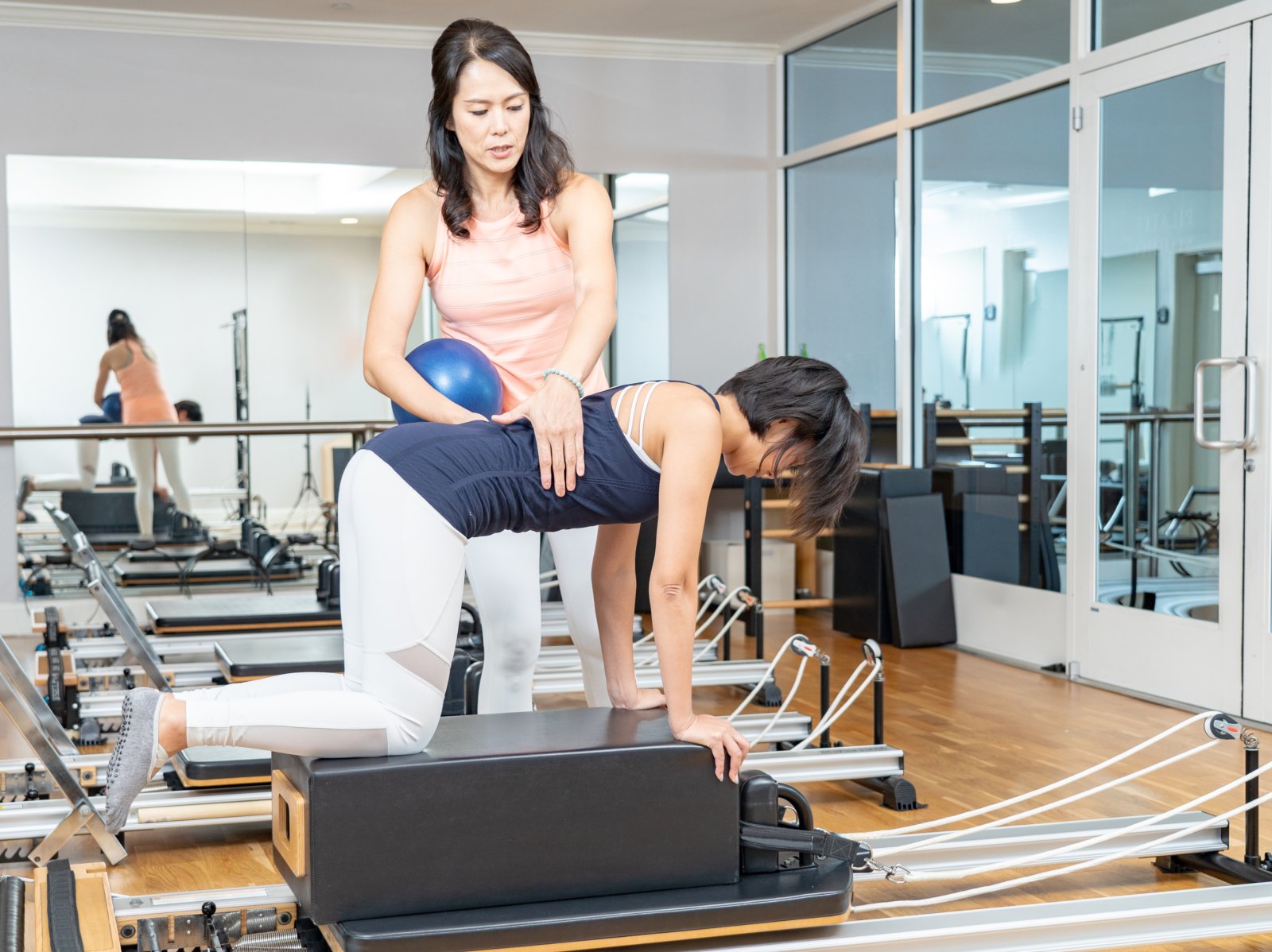
Supportive instructor guiding a woman through gentle reformer pilates energy exercises in a bright studio.
A first routine should feel almost too easy. Use this sequence as a template, spending about 10 to 12 minutes total:
Breathing setup (1 minute): Lie on your back with knees bent and feet flat. Inhale through the nose for a count of four, exhale through the mouth for a count of six. Keep the ribs soft rather than forcing a big breath.
Pelvic tilts (8 reps): Exhale as you gently flatten the lower back toward the floor, inhale as you release. Easier option: place a small folded towel under the hips. Progression: slow the tempo to a four-count in and four-count out.
Gentle bridges (6 reps): Press through the feet and lift the hips only a few inches, then lower one vertebra at a time. Easier option: lift just enough to feel the glutes engage. Progression: pause for two breaths at the top.
Standing posture work (1 minute per side): Stand with your back near a wall or chair, soften the knees, and lengthen the crown of the head upward. Easier option: sit tall in a chair with feet grounded. Progression: add a slow arm reach overhead.
Cool-down (2 minutes): Lie on your back and take slow breaths, letting the shoulders and jaw relax.
Watch out: Pushing through sharp pain, dizziness, or shortness of breath can lead to injury. Stop the movement and tell your instructor if you feel any of these.
Progress gradually: add one repetition per exercise every week or two, or add a second short session before lengthening an existing one.
A 15-Minute Pilates Energy Booster You Can Do at Home
When time is short, a 15-minute routine can fit into a busy day. Keep the pace calm and focus on your breath.
Breathe deeply for one minute, lying on your back
Perform 8 pelvic tilts, pausing at the top
Do 6 gentle bridges, lifting slowly from the hips
Hold a standing posture stretch for 30 seconds on each side
Finish with 2 minutes of slow breathing and relaxed shoulders
Gentle Pilates for Fatigue: Modifications and Pacing
On low-energy days, choose the gentlest version of each exercise. Smaller range of motion, fewer repetitions, and more rest breaks all help. Pacing means matching effort to how you feel that day, not to a fixed plan.
Energy Level | Suggested Approach | Session Length | Rest Between Exercises |
Low | Breathing and gentle stretches only | 8-10 minutes | 30-60 seconds |
Moderate | Core and posture exercises at slow tempo | 15-20 minutes | 20-30 seconds |
Good | Full beginner routine with light progression | 25-30 minutes | 15-20 seconds |
Use these pacing rules to keep sessions fatigue-aware:
Cap session length first. If you feel worse the day after a session, cut the next session by about half rather than pushing through.
Schedule rest days deliberately. Two to three short sessions per week is a reasonable starting point; add a day only after two weeks of consistent recovery.
Progress one variable at a time. Increase duration, repetitions, or difficulty separately, not all at once.
Fatigue is not one thing, so tailor the approach to the likely cause:
Everyday tiredness or poor sleep: short morning sessions and consistent bedtimes often help more than long workouts.
Stress or burnout: prioritize breathing, slow tempo, and gentle stretching; keep intensity low until sleep and mood stabilize.
Illness recovery: start with breathing and seated posture work, and get medical clearance before returning to core or reformer work.
Menstrual symptoms: reduce range of motion and session length on heavy or painful days; gentle bridges and breathing are usually better tolerated than deep core work.
Chronic-condition-related fatigue: treat pacing as medical self-management and coordinate with your care team rather than following a generic plan.
Watch out: If fatigue worsens steadily over several sessions despite reduced effort, stop and seek medical advice rather than assuming you need to try harder.
To judge whether Pilates is helping, track a few simple measures for four to six weeks: rate your energy and fatigue on a 1-10 scale before and after each session, note sleep quality, and record whether you needed extra rest the following day. A pattern of steadier energy and easier recovery is a better signal than a single good or bad session.
Normal Tiredness or Concerning Fatigue? When to Get Checked
Feeling tired after a workout is normal, especially when you start something new. Concerning fatigue lasts for weeks, interferes with daily life or comes with other symptoms such as chest pain, shortness of breath, unexplained weight changes or dizziness.
If your fatigue is persistent or severe, speak with a doctor before starting a new exercise plan. A healthcare professional can help find the cause and advise on safe activity.
Booking Your First Pilates Class to Build Steady Energy
For current pricing and any introductory offers, visit the FLX FLO Pilates website. You can see current pricing options before you book. To find a time that fits your week, check the class schedule for beginner-friendly sessions.
If you are unsure where to begin, our beginner reformer guide for Red Bank compares class options and first-class tips. Book your first class with FLX FLO Pilates and start building steady energy at a pace that suits you.
Frequently Asked Questions
Does Pilates give you more energy?
Results vary with fitness level, health conditions and how consistently you practice. Most people notice changes gradually over several weeks rather than after a single class. If your fatigue is persistent or severe, talk with a qualified healthcare provider before relying on exercise alone.
How many times a week should I do Pilates for energy?
Many beginners start with two sessions per week and add a short home routine on lighter days. Consistency tends to matter more than intensity for building energy and resilience. Listen to how you feel the next day: if you are still drained, reduce the number of sessions or the effort level for a while. Rest days are part of the plan, and recovery helps your body adapt to new movement patterns.
Why might I feel exhausted after a Pilates class?
Some tiredness after a first few classes is normal because you are using muscles and movement patterns you may not use often. This usually fades within a day. Feeling wiped out for longer, or experiencing dizziness, pain or unusual shortness of breath, is a sign to scale back and consult a professional. Using modifications, pacing your effort and staying hydrated can help you tell ordinary soreness from something that needs attention.
Can gentle Pilates help when I feel tired?
Gentle Pilates can be a useful option on low-energy days because it asks for controlled movement rather than high intensity. Focus on breathing, small range movements and posture work, and stop if you feel drained. Gentle sessions are not a substitute for medical care or adequate sleep, but they can help you move with less strain and feel more settled. Start with shorter sessions and build gradually.