How to Build Strength Without Intensity

Quick Summary
You can build strength without intensity by training with control instead of force, slowing your reps and holding positions rather than chasing exhaustion. Strength depends on nervous system coordination and mechanical tension, and both respond to controlled, lower-intensity work. This approach offers a large share of the strength benefit with less joint stress, lower injury risk, and easier recovery.
Slow the lowering phase to three to five seconds to raise tension without adding load.
Stop each set with two to three reps left in reserve rather than grinding to failure.
Add reps first, then slow the tempo, then add a pause, then increase difficulty.
Train four to six exercises for two to three sets, about three times per week.
Deload every fourth week by cutting sets roughly in half.
Table of Contents
What "Without Intensity" Actually Means for Strength
Last Updated: October 28, 2026
Building strength without intensity sounds like a contradiction. Readers looking for local options can explore [Monmouth County low-impact strength training](/post/low-impact-strength-training-in-monmouth-county) for the same principles applied nearby. Most people assume strength only comes from lifting heavy, pushing hard, and feeling sore the next day. That idea is common, but it leaves out a lot. At FLX FLO Pilates, movement is intentional, and strength is built with precision.
The phrase needs a clear definition before you can use it. Without intensity does not mean doing nothing. It means you train with control instead of force, and you stop chasing exhaustion as proof that a workout worked.
Intensity vs. Effort vs. Load
These three words get mixed up all the time, so it helps to separate them.
Load is how much resistance you move, such as a heavier weight or a harder body position.
Intensity is how hard the workout feels overall, including speed, strain, and how close you get to failure.
Effort is how much focus and control you bring to each rep.
You can build strength with plenty of effort and very little intensity.
How Strength Adapts at Lower Intensity
Strength is not one adaptation. It is at least two, and they respond to different training signals.
The Two Adaptations Behind Strength
Neural adaptation is your nervous system getting better at recruiting and coordinating muscle fibers. It improves within weeks, requires relatively little fatigue, and is the dominant source of early strength gains for most people. You get stronger because your brain and nerves drive the same muscle more efficiently, not because the muscle got bigger.
Muscular adaptation is a change in the muscle itself: more contractile protein, more connective tissue stiffness, better local endurance. It develops more slowly and is driven largely by mechanical tension and time under tension rather than by how close you get to failure.
Why Technique and Coordination Count as Strength
Strength is force expressed through a movement pattern.
The Time-Under-Tension Mechanism
Mechanical tension is the primary driver of strength adaptation. You can raise tension without raising load by slowing the movement. A common guideline is a three- to five-second lowering phase and a one- to two-second pause at the hardest point of the range. A set of 8 reps performed this way can keep a muscle under tension for 40 to 60 seconds, comparable to a much heavier set performed quickly, but with far less joint stress and far less systemic fatigue.
What Progress Actually Looks Like
The same rep count feels more controlled and less shaky.
You can add a pause or slow the tempo without losing form.
Daily tasks, carrying groceries, climbing stairs, getting off the floor, feel easier.
You can complete the same set at the same perceived effort with slightly more resistance or a harder variation.
The Trade-Off to Understand
Lower-intensity training will not maximize raw maximal strength the way heavy, near-failure lifting can. What it does offer is a large share of the strength benefit with a much lower recovery cost, lower injury risk, and better adherence. For beginners, returning exercisers, and anyone training around joint issues or a busy schedule, that trade-off usually favors the lower-intensity route.
Low-Impact Strength Training Principles for Beginners and Returning Exercisers
If you are new to exercise or coming back after a break or injury, consult a qualified professional about an appropriate way to begin. For a safe starting point, see beginner pilates classes for men, which explains what to expect when you start.
A few general principles can help guide a start:
Start with a challenge you can control. You should finish each set feeling worked, not wiped out.
Prioritize form over speed. Move slowly enough to feel each muscle engage.
Build up slowly. Add a few reps or seconds each week before you add anything else.
Listen for pain. Mild effort is normal. Sharp pain is a signal to stop and adjust.
If you have an injury, a chronic condition, or any health concern, check with your doctor or a qualified professional before you start. General guidance cannot replace a personal assessment.
Strength Training Without Weights: Bodyweight and Reformer Options
Bodyweight options include:

Glute bridges, which build hip and back strength.
Modified push-ups against a wall or bench.
Wall or chair squats, which teach controlled knee and hip movement.
Planks and side planks, which strengthen the deep core.
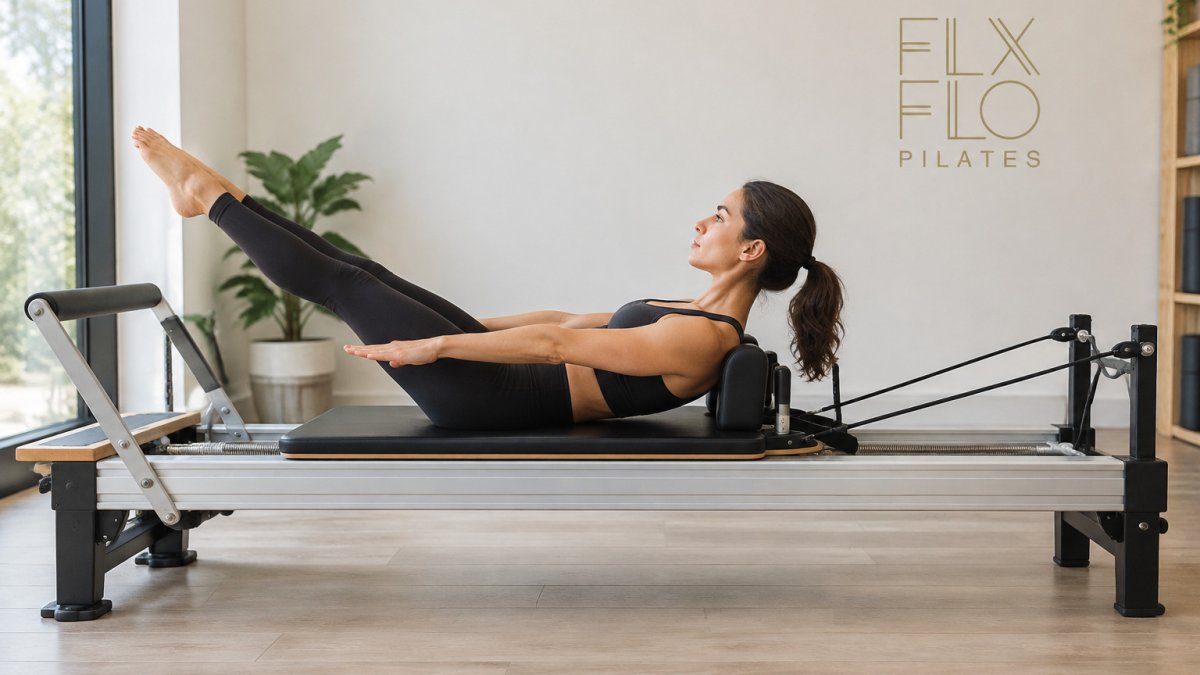
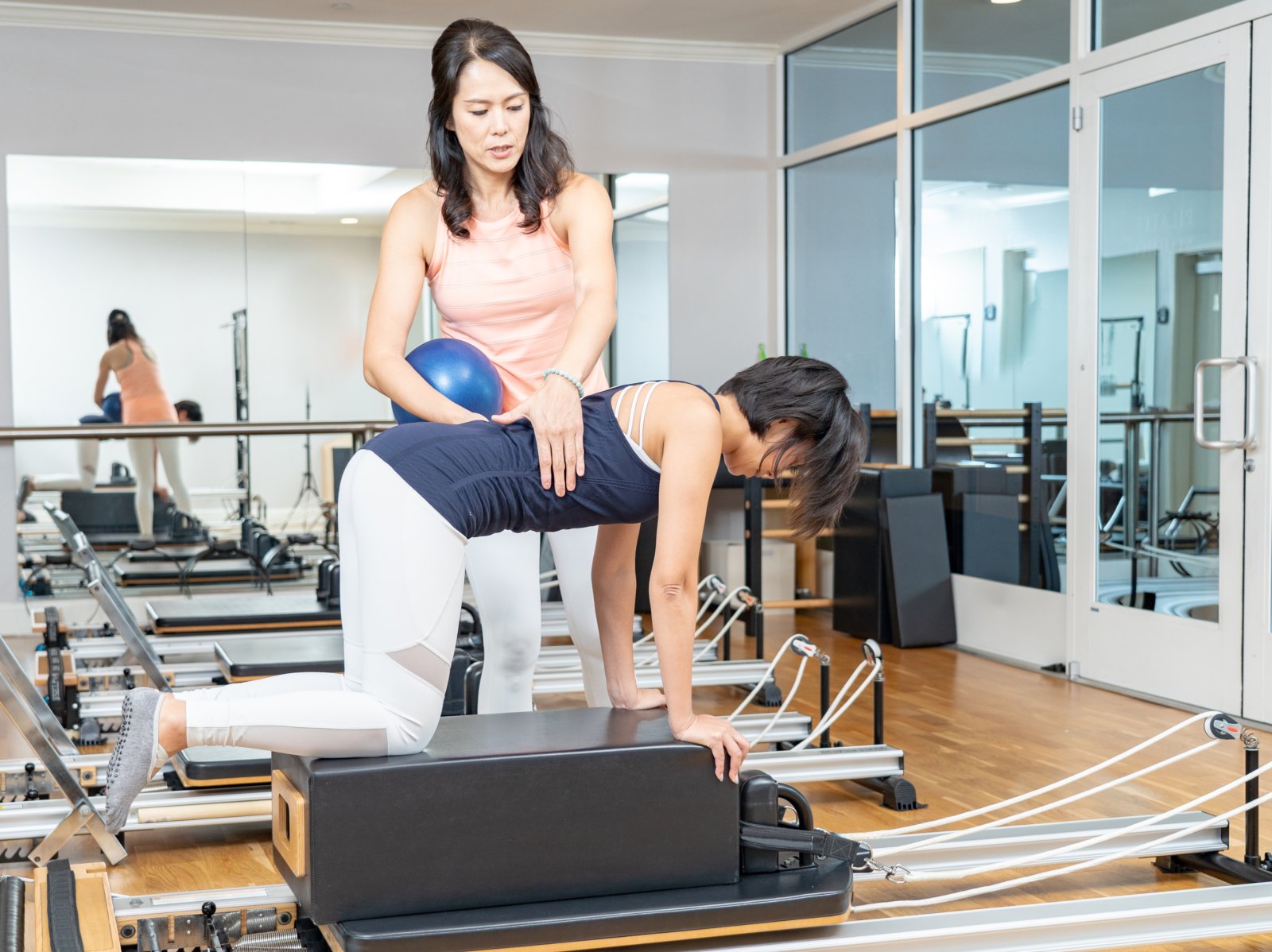
Reformer Pilates is a method for mindful movement and sustainable strength.
Applying Progressive Overload With Low-Impact Exercise
Progressive overload is the one principle every strength plan shares. The gap most articles leave is the how: what to change, by how much, and when. Here is a concrete low-intensity progression model you can run for eight to twelve weeks.
Start With a Baseline You Can Control
Pick four to six exercises covering a push, a pull, a squat pattern, a hinge, a core exercise, and a carry or bridge. For each, find a variation and rep count where you finish the last rep feeling you had two to three reps left in reserve, not grinding, not gasping. That is your starting point. Write it down.
The Weekly Progression Rules
Change one variable per week, in this order:
Add reps first. Work from 8 controlled reps toward 12 at the same tempo and load.
Slow the tempo next. Once you hit 12 reps, keep the rep count and extend the lowering phase from three seconds to four, then five.
Add a pause. Introduce a two- to three-second pause at the hardest point of the range.
Increase difficulty last. Move to a harder variation, a lower push-up surface, a single-leg bridge, a longer lever, only after the first three steps are clean.
If form breaks or you cannot complete the target reps with two reps in reserve, hold the current step for another week. Stalling is information, not failure.
A Practical Weekly Template
Component | Guideline |
Exercises per session | 4 to 6 |
Sets per exercise | 2 to 3 |
Reps | 8 to 12 controlled |
Tempo | 3-5 seconds down, 1-2 second pause, controlled up |
Rest between sets | 60 to 90 seconds |
Effort | Stop with 2-3 reps in reserve |
Session length | 25 to 35 minutes |
When to Deload
Every fourth week, cut sets by about half and keep the same exercises and tempo. This is not lost time; it is where adaptation consolidates. If you feel unusually tired, sore for more than two days, or notice sleep and mood slipping, deload sooner.
Measuring Progress Without a Max Lift
Rep quality: Can you complete the same set with less shaking and better control?
Tempo tolerance: Can you slow the lowering phase by a second without losing form?
Daily tasks: Are stairs, carrying groceries, or getting off the floor easier?
Same effort, more resistance: Can you complete the same set at the same perceived effort with a harder variation?
How Often to Strength Train Without Overdoing It
Consider a simple weekly plan:
Monday: Full-body session, about 30 minutes.
Wednesday: Full-body session, slightly harder.
Friday: Full-body session, focusing on form.
Rest days are part of the plan. Your muscles adapt between sessions, not during them. Sleep, regular meals, and easy daily movement all support recovery. If you feel unusually tired or sore for several days, take an extra rest day.
Booking Your First Low-Impact Strength Session at FLX FLO Pilates
Starting is often the hardest part. You can check beginner reformer class times and levels on the schedule before you book. Compare membership pricing options to choose the plan that fits how often you plan to train. FLX FLO Pilates emphasizes a personalized approach that evolves with the individual.
Building strength without intensity is not about doing less. It is about doing things with more control, consistency, and care.
Frequently Asked Questions
Can you build strength without high-intensity workouts?
Because individual needs vary, consult a qualified professional before starting if you have an injury or medical condition.
Do you need weights to build strength?
No. Bodyweight exercises such as squats, push-ups on an incline, bridges, and planks can build strength when you progress them over time. Reformer Pilates uses springs for resistance, which allows controlled loading without free weights. The key is making the exercise gradually harder through more repetitions, slower tempo, a longer hold, or a more challenging variation.
How often should I do low-impact strength training?
Many beginners start with two to three sessions per week, with at least one rest day between sessions for the same muscle groups. Consistency usually matters more than frequency. If you feel unusually sore or fatigued for more than a couple of days, reduce volume and allow more recovery. Adjust the schedule around your sleep, work demands, and energy levels.
What is the difference between low-intensity and low-impact exercise?
Intensity describes how hard you work, while impact describes the force that travels through your joints when your feet or body hit the ground.