Is Pilates Effective for Athletic Training? 7 Answers

Updated: Nov 11
Last Updated: November 4, 2026
Quick Summary
Is Pilates effective for athletic training? For many athletes it is, especially for core stability, joint control and injury resilience. Its controlled movements build the deep stabilizing muscles that support nearly every sport.
Pilates trains deep postural muscles, the pelvic floor, and the muscles around the spine and hips that stabilize the body.
Reformer Pilates uses a sliding carriage and adjustable springs to load the core while keeping the spine and joints aligned.
Pilates is a supplement to strength training, plyometrics and sport practice, and cannot prevent every injury.
Most athletes benefit from two to three Pilates sessions per week, scheduled alongside regular training.
Returning to full sport as soon as pain disappears can raise re-injury risk, so check with a professional first.
Table of Contents
Is Pilates effective for athletic training? For many athletes, the answer is yes, particularly when the goal is core stability, joint control and injury resilience rather than maximal strength alone. Pilates works through controlled, precise movement, which builds the deep stabilizing muscles that support every sport. The sections below answer the most common questions athletes ask before they commit to a routine.
What Pilates Does for an Athlete's Body
Pilates is a movement method built around alignment, breath and controlled muscle activation. Its exercises train the deep postural muscles, the pelvic floor and the muscles around the spine and hips that stabilize the body during rapid or repeated motion. Athletes often find that these qualities transfer directly to performance because nearly every sport depends on a stable trunk.
A common mistake is treating Pilates as only a gentle stretching routine. Done well, it challenges neuromuscular coordination, the way the nervous system recruits muscles in the right order and timing. Better coordination is generally described as supporting movement economy, meaning less wasted energy over a long training session or competition.
Reformer Pilates for Core Strength in Sport
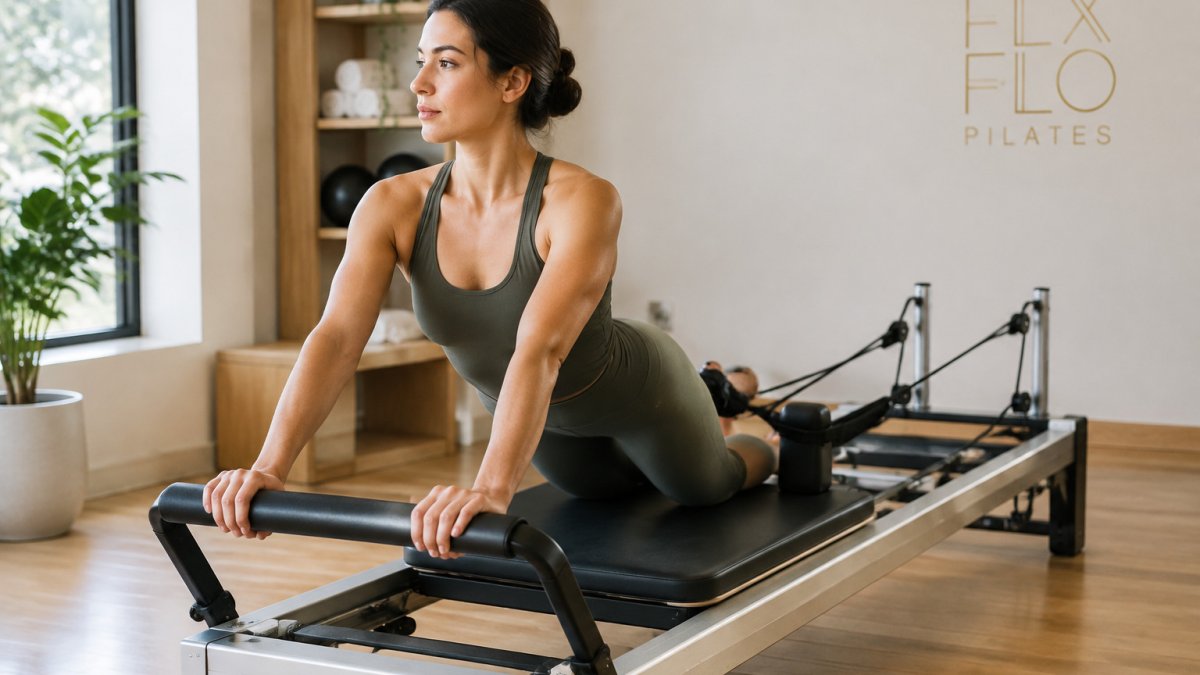
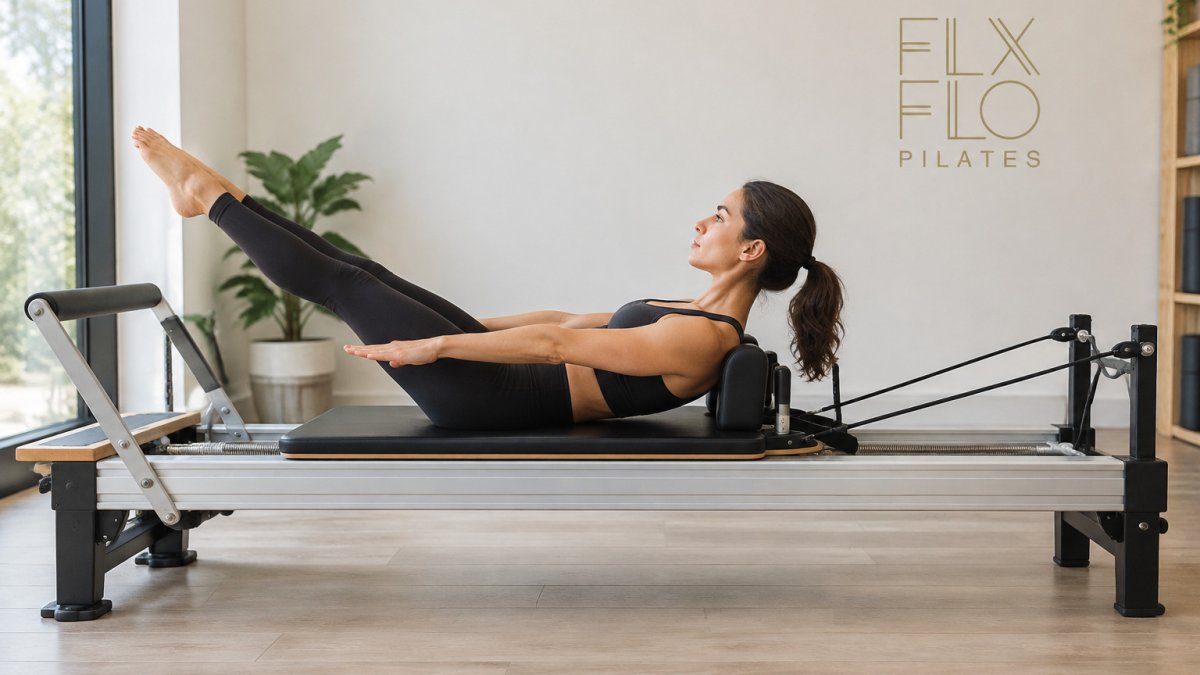
Reformer Pilates uses a sliding carriage and adjustable springs to add resistance and support. For athletes, this makes it possible to load the core through many movements while keeping the spine and joints well aligned. Exercises such as leg work, footwork and controlled pulls let you train the trunk under light resistance and progress gradually.

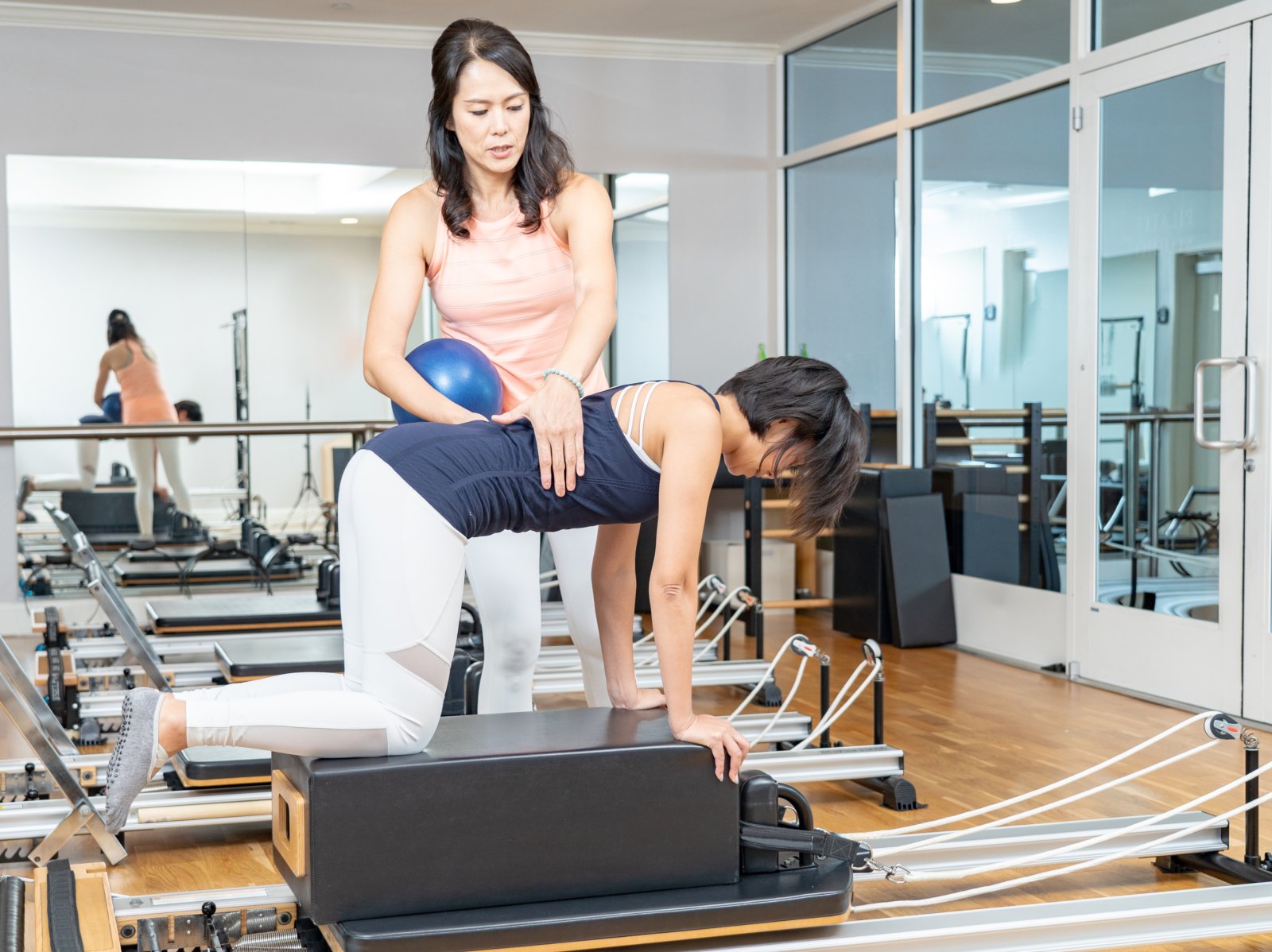
Athlete performing a reformer Pilates exercise for core strength as an instructor observes in a studio.
Core strength in sport is less about how many crunches you can do and more about how well your trunk resists unwanted motion. Reformer work trains that resistance from many angles, which matches what happens during sprinting, throwing or changing direction.
Pilates for Injury Prevention and Rehabilitation
Injury prevention is a commonly discussed reason athletes use Pilates, though the evidence is still developing. If you're dealing with ongoing back problems, you can read whether reformer Pilates can help chronic back pain. Pilates emphasizes the deep stabilizing muscles, such as the transversus abdominis, multifidus, pelvic floor, gluteus medius and rotator cuff, and trunk and joint control under movement.
Pilates Benefits for Athletes (Best Cross-Training Workout)
Online Pilates Classes by Lesley Logan
A useful way to think about it is in three phases, because 'doing Pilates for injury prevention' means different things depending on where the athlete is:
1. Prehab (healthy athlete, in-season). The goal is to keep the stabilizers switched on despite heavy sport load.
2. Rehab (post-injury, cleared for controlled movement). Here Pilates is a bridge between physical therapy and full sport return.
3. Return to sport. The athlete is only ready when they can hold trunk alignment during sport-like speeds and directions, not just during slow controlled reps. Add standing reformer work, standing mat work with a resistance band, and single-leg balance challenges with head turns or ball tosses to simulate the chaos of competition.
Watch out: returning to full sport as soon as pain disappears can increase the risk of re-injury, so check with a qualified professional before resuming full training. Before returning to full training after an injury, talk with the treating clinician about when it is appropriate to resume.
Pilates is not a substitute for strength training, plyometrics, or sport practice, and it cannot prevent every injury.
Sport-Specific Benefits: Golf, Running and Swimming
The benefits of Pilates depend on a sport's dominant movement pattern and its most common failure point. Below is how the method can be applied to three common athlete profiles, and when Pilates may be a lower priority.
Golf. The swing is a rotational, sequential movement: hips lead, thorax follows, arms deliver. The two qualities that break down first are thoracic rotation and the ability to separate hip rotation from lumbar rotation. A Pilates session for a golfer should include side-lying thoracic rotation, reformer kneeling rotation with a light spring, and the 'saw' and 'spine twist' on the mat to build dissociation. Sets and reps: two to three sets of eight to ten controlled reps per side, twice a week in-season. The failure mode to watch for is a golfer who can rotate the thorax beautifully in the studio but reverts to lumbar rotation under swing speed, so add standing, faster-tempo rotation drills as the season approaches.
Running. Runners rarely lack hip flexor strength; they lack pelvic control under single-leg load and hip extension power. The Pilates priorities are single-leg stability (reformer single-leg press, standing single-leg balance with arm drivers), gluteus medius endurance (side-lying leg series, side-lying reformer work), and anti-rotation trunk control (bird dog, dead bug, Pallof-style band press). Two 30-minute sessions per week alongside mileage is a common pattern. The failure mode: a runner who does Pilates only on rest days and never carries the control into running drills, pair the studio work with strides and single-leg run-throughs so the pattern transfers.
Swimming. The stroke is a long-axis rotation driven from the trunk, with the shoulder as the most injury-prone joint. Pilates work should emphasize thoracic extension and rotation, scapular upward rotation and control, and trunk anti-extension so the hips do not drop. Reformer rows, prone Y-T-W raises, side-lying external rotation, and the mat 'swan' preparation are the workhorses. Two sessions per week in-season, more in the off-season. The failure mode: a swimmer who builds shoulder stability in the studio but never addresses the thoracic stiffness that forces the shoulder to overwork, so thoracic mobility drills belong in every session.
When Pilates is the wrong priority. This is the part most articles skip. Pilates is a low-load control method, and it is not the right primary tool in three situations: (1) the athlete needs maximal strength or power, a powerlifter, thrower, or sprinter in a strength block should not swap barbell work for reformer work; (2) the athlete is in a high-volume plyometric or contact-sport block, adding two hard reformer sessions on top of that load raises overtraining risk, so keep Pilates to one restorative session per week; and (3) the athlete has an acute injury with pain, swelling, or instability, that is a clinical matter first, and Pilates comes after clearance. For these profiles, Pilates is a supplement, not a substitute, and the dose should drop rather than rise.
The through-line: choose the two or three Pilates exercises that map to your sport's dominant pattern and failure mode, do them consistently, and test whether the control shows up in sport, not just in the studio.
The article breaks down how Pilates applies to three sports, including the key exercises and training frequency for each.
Sport | Key Pilates focus | Frequency in season |
Golf | Thoracic rotation and hip-lumbar dissociation | Twice a week |
Running | Single-leg stability and gluteus medius endurance | Two 30-minute sessions per week |
Swimming | Thoracic mobility and shoulder control | Two sessions per week, more in off-season |
Reformer vs. Mat Pilates for Athletes
Mat Pilates uses body weight and gravity, which makes it accessible and portable. Reformer Pilates adds springs and a moving carriage, which allows heavier or more varied loading and more support for beginners and people managing injuries. Both methods build core control, but reformer work often provides a finer level of adjustment.
For many athletes, the best choice depends on goals and experience. Mat work is a strong foundation and easy to practice at home. Reformer training can add progressive load and precise feedback, which some athletes find valuable for building strength while keeping form intact.
Best for: athletes who want progressive, measurable resistance and tailored form correction. Skip if: you only want a short, low-cost routine you can do anywhere without equipment.
How Often Should Athletes Do Pilates?
Most athletes benefit from two to three Pilates sessions per week, scheduled alongside their regular training. Frequency depends on the training load, recovery needs and how much time you can commit. Consistency tends to matter more than intensity, because the neuromuscular changes Pilates produces develop over weeks rather than single sessions.
Avoid stacking hard Pilates sessions on top of heavy lifting or high-intensity intervals without adequate rest. Listen to how your body responds and adjust accordingly. If you are unsure how Pilates fits your schedule, ask an instructor to help plan a sustainable rhythm.
Booking Your First Session at FLX FLO Pilates
Starting is simpler than many athletes expect. To learn about current introductory offers, memberships, class packs and private sessions, visit our pricing page.
To see current class times and availability, visit our schedule. If you are weighing options, our pricing page has current details so you can choose what suits your schedule and budget.
Pilates can be a valuable part of athletic training when it is matched to your sport, your current condition and your goals. Start with a few sessions, track how your movement changes, and build from there. At FLX FLO Pilates, our instructors are ready to help you take that first step.
Frequently Asked Questions
Is Pilates a good workout for athletes?
Pilates can be a useful supplement for many athletes. It trains core control, hip and spine mobility, and the deep stabilizing muscles that support heavier training. It does not replace sport-specific conditioning, speed work or strength training with heavy loads. Athletes get the most value when Pilates sits alongside their primary program, with the goal of improving control and alignment. Talk with a sports medicine professional or coach about how it fits your training load and any existing injuries.
Does Pilates help prevent sports injuries?
Pilates is often used to address muscle imbalances, weak stabilizers and poor movement patterns that contribute to strains and overuse injuries. Its emphasis on body awareness, breath control and controlled range of motion can help athletes move more efficiently. Research on Pilates for injury prevention in athletes is still developing, so it should be treated as one part of a broader prevention plan. Work with a qualified professional if you are managing a specific injury.
How often should athletes do Pilates?
Many athletes train Pilates two to three times per week, often for 45 to 60 minutes per session, and schedule it around heavy training days. Consistency matters more than intensity, because the benefits in control and alignment build over time. The right frequency depends on your sport, season, training volume and recovery needs. A coach, physical therapist or certified Pilates instructor can help you set a schedule that fits your program.
Can Pilates improve core strength for sports performance?
Pilates trains the deep trunk muscles, including the transverse abdominis and multifidus, that stabilize the pelvis and spine during running, throwing, swimming and change-of-direction movements. Reformer exercises add adjustable resistance, which lets you progress load while keeping form controlled. Better core control can support force transfer through the kinetic chain. Results depend on consistent practice alongside your regular sport training.