Pilates for Wrist Pain from Computer Work: Routine and Fixes

Last Updated: November 22, 2026
Quick Summary
Pilates can help with wrist pain from computer work when you adjust weight-bearing positions and add gentle mobility and strengthening. Use forearms for plank, fists or the heel of the hand for push-ups, and a folded towel for padding. Stop any movement that causes sharp pain.
Move from hands to forearms for plank work to take load off the wrist.
Do wrist circles and prayer stretches daily as a mobility warm-up.
Strengthen the wrist with flexion, extension and radial deviation moves 2 to 3 times per week.
Set keyboard height so elbows sit near 90 degrees and wrists stay straight.
See a qualified health professional for persistent numbness, tingling or hand weakness.
Ready to move with less wrist pain?
FLX FLO Pilates offers beginner-friendly reformer classes with modifications for your body.
Table of Contents
Why Computer Work Strains Your Wrists During Pilates
If your wrists ache during Pilates, you are not alone. For guidance on modifying movements safely when other joints, such as shoulders, are painful, see step-by-step shoulder-safe modifications.
Prolonged computer use keeps the wrists in a flexed, held position. Learn how reformer Pilates counteracts desk posture problems if sitting habits are part of the picture. Over time, that can leave the forearm muscles tight and the joints less comfortable under load.
Common signs your wrists need a break:
Aching or stiffness after typing or mouse use
Discomfort when pressing into your hands during class
Tingling or numbness in the fingers
CDC guidance on workplace musculoskeletal health
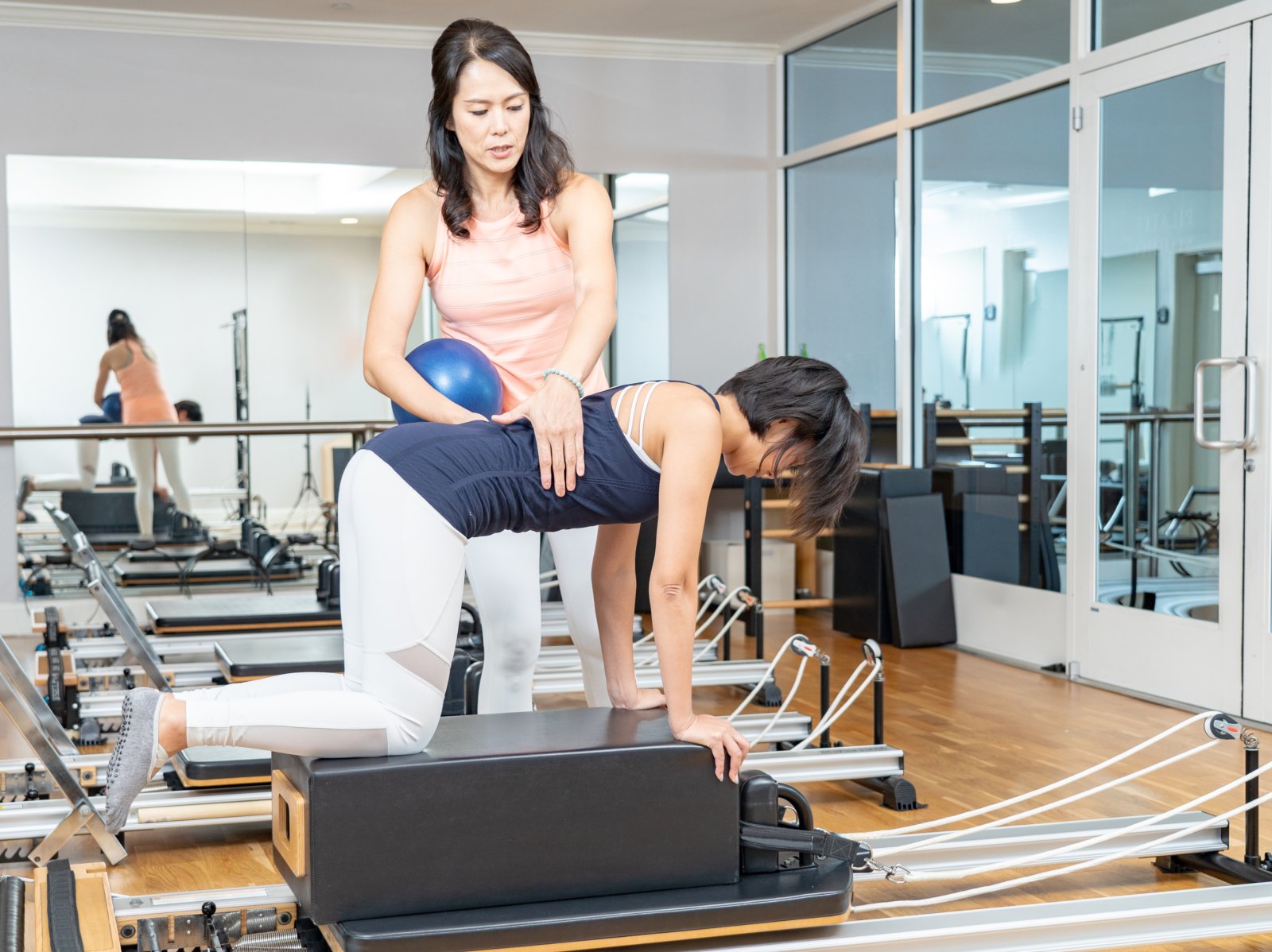
Pilates Modifications for Wrist Pain in Weight-Bearing Positions
You do not have to skip weight-bearing work to protect your wrists.

(https://www.niams.nih.gov/health-topics/carpal-tunnel-syndrome) professional.
CDC guidance on workplace musculoskeletal health
The table below summarises the strengthening moves and how often to do them, as described in the routine.
Move | Target | Frequency |
Wrist flexion curl | Palm-up forearm curl, lowered with control | 2 to 3 sessions per week |
Wrist extension | Palm-down, lift back of hand slowly | 2 to 3 sessions per week |
Radial deviation | Thumb-side lift, like a wrist hammer curl | 2 to 3 sessions per week |
Forearm pronation and supination | Slow palm up and down rotation | 2 to 3 sessions per week |
A 10-Minute Desk Stretch Routine for Wrist Pain
Use this routine during a work break. It takes about 10 minutes and needs no equipment.
Wrist circles (1 minute): Rotate each wrist slowly in both directions.
Prayer stretch (2 minutes): Press palms together at chest height, lower gently, and hold.
Reverse prayer (2 minutes): Backs of hands together, hold without forcing.
Finger extensor stretch (2 minutes): Extend the arm, gently pull the fingers back, and hold.
Forearm rest with shoulder rolls (2 minutes): Rest forearms on the desk and roll the shoulders back.
Neutral wrist reset (1 minute): Relax the hands and breathe.
Repeat this routine two to three times per workday. For a broader approach, a step-by-step guide to correcting posture from sitting covers the habits behind the strain. A common mistake is stretching too hard. Aim for a gentle pull, never sharp pain.
Ergonomic Changes and Red Flags: Booking Your Next Step With FLX FLO Pilates
Small workstation changes help more than most people expect, and they pair naturally with the Pilates work above. The goal is to keep the wrist close to neutral and to reduce the small, repeated loads that build up over a workday.
A practical desk setup for wrist comfort
Keyboard height: Set the keyboard so your elbows are at about 90 degrees and your forearms are roughly parallel to the floor. Wrists should float straight, not bend up or down.
Mouse position: Keep the mouse close to the keyboard so you are not reaching. A mouse that sits far to the side keeps the wrist in a held, bent position for hours.
Forearm support: Rest the forearms on the desk or on padded armrests when you pause, and avoid resting the wrist itself on a hard edge.
Symptom-based guidance and red flags
Most desk-related wrist discomfort improves with movement breaks, ergonomic changes, and graded strengthening. Seek assessment from a qualified health professional if you notice:
Numbness or tingling that persists after you stop typing, especially in the thumb, index, and middle fingers
Weakness in the hand, such as dropping objects or difficulty with a pinching grip
Swelling, warmth, or redness around the wrist
Pain that does not improve after a few weeks of rest, modification, and the exercises above
These signs do not diagnose a specific condition, but they are a reasonable signal to get individualized advice rather than self-manage indefinitely.
Putting it together with your Pilates practice
Use the desk setup during the workday and the mobility and strengthening blocks from the previous section two to three times per week. On the mat, choose the modification that keeps the wrist neutral: forearms for plank, fists or the heel of the hand for push-up variations, and a folded towel under the palms when you need padding. If a position produces sharp pain, stop and move to the next option.
If you want guidance on modifying your practice safely, FLX FLO Pilates can help you find a beginner-friendly reformer class to start with. You can book a reformer class at FLX FLO Pilates with our new-client intro offer of 3 group classes for $90, and our team will help you adapt the work to your wrists.
Frequently Asked Questions
How do I stop wrist pain from computer work?
Start by checking your setup: keep the keyboard and mouse at elbow height, wrists straight and forearms supported, and the mouse close enough that you are not reaching. Take a short break every 30 to 60 minutes to move your hands and wrists through gentle range of motion. Many people also notice that taking breaks, adjusting their grip on the mouse, and reducing sustained wrist bending helps. If pain persists, numbness, tingling or weakness develops, or symptoms worsen, consult a qualified healthcare professional rather than pushing through.
What Pilates exercises are good for wrist pain?
Low-load options that avoid heavy weight through the hands are the best starting point. Forearm-supported positions, gentle wrist circles, finger spreads and light wrist mobility work are commonly used. Pilates modifications for wrist pain, such as moving from hands-flat to forearms-down positions, let you keep training your core and upper body while reducing wrist load. Stop any movement that increases sharp or lasting pain, and check with a qualified instructor or clinician before starting if you have an existing injury.
Why do my wrists hurt during Pilates?
Wrist pain in Pilates often comes from putting body weight through extended wrists in plank, push-up or four-point positions, especially if you already have stiffness or irritation from long hours at a keyboard. Gripping the floor, collapsing into the wrist joint or holding positions too long can add strain. Adjusting hand placement, shifting weight onto the forearms, and building wrist and forearm strength gradually usually reduces the problem. Persistent pain warrants a professional evaluation.
When should I stop exercising and seek help for wrist pain?
Stop exercising and seek care from a qualified healthcare professional if you have numbness, tingling, weakness in the hand, swelling, redness, warmth, a visible deformity, or pain that wakes you at night or does not ease with rest. Pain that gets worse with each session, or that follows a fall or injury, also needs prompt assessment. Mild stiffness that improves with gentle movement is common with desk work, but it should not be ignored if it persists for weeks.