Does Pilates Build Deep Core Strength: A How-To Guide

Table of Contents
What Deep Core Strength Actually Means
How Pilates Strengthens the Deep Core
The Role of the Transverse Abdominis
Spinal Support and Postural Alignment
How to Engage Your Core in Pilates
Pilates Exercises to Strengthen Your Core
Beginner-Friendly Variations and Modifications
Common Form Errors and How to Correct Them
Reformer Pilates for Core Strength
How Often to Do Pilates for Core Strength
Measuring Your Progress: How to Know Deep Core Strength Is Improving
What Pilates Can and Cannot Do for Core Strength
Frequently Asked Questions
Last Updated: October 21, 2026
What Deep Core Strength Actually Means
Deep core strength is the strength and endurance of your innermost abdominal muscles and stabilizers.
Your deep core includes several key players. The transverse abdominis wraps around your torso like a corset. The multifidus runs along your spine.
Deep stabilizers differ from superficial muscles. Your rectus abdominis (the "six-pack" muscle) creates movement and visible definition; deep core muscles create stability and support.
At FLX FLO Pilates, we focus on activating these deep stabilizers from day one.
Key Takeaway Deep core strength is the foundation of stability and spinal support. It's built through controlled, intentional movement, not through high-intensity exercise.
How Pilates Strengthens the Deep Core
Pilates is designed to target deep core muscles through controlled movement, breath awareness, and precise form, and yes, does pilates build deep core strength when practiced with intention rather than high-impact exercise.
Here's why Pilates works for deep core strength:
Controlled, slow movements force your deep muscles to work continuously
Breath awareness triggers diaphragm engagement and core activation
No momentum means your stabilizers can't take a break
Body weight resistance builds muscle endurance without impact
Postural focus trains muscles to support alignment
The method emphasizes quality over quantity: one Pilates exercise with proper form activates more deep core muscle than dozens of careless crunches.
The Role of the Transverse Abdominis
The transverse abdominis is your deepest abdominal muscle. It's your body's natural corset, wrapping horizontally around your torso.
Pilates targets this muscle directly. The Hundred, Pelvic Curls, and Leg Circles all require transverse abdominis engagement, teaching your deep abs to fire automatically during daily activities.
A strong transverse abdominis reduces lower back stress and maintains neutral spine alignment, improving posture and reducing discomfort over time.
Spinal Support and Postural Alignment
Your deep core muscles are your spine's support system.
Pilates trains your deep core to support your spine automatically. As you practice, these muscles learn to engage before movement happens.
The result is improved postural alignment. Your shoulders sit back naturally. Your chest lifts. Your lower back maintains its natural curve.
Better alignment reduces joint stress, improves breathing, and boosts confidence and energy. Many people report feeling taller and more present after consistent practice.
How to Engage Your Core in Pilates
Core engagement in Pilates isn't about sucking in your stomach; it's about activating your deep stabilizers with intention and breath.
Here's how to engage your core properly:
Find neutral spine, Lie on your back with knees bent. Your lower back should have a small natural curve, not pressed flat to the floor.
Breathe in to prepare, Take a full breath through your nose. Feel your ribs expand sideways and back.
Exhale and engage, As you exhale, gently draw your navel toward your spine. Imagine pulling a corset tight. This activates your transverse abdominis.
Maintain the engagement, Keep this gentle contraction throughout the exercise. It should feel like 30-40% effort, not maximum tension.
Continue breathing, Never hold your breath. Breathing sustains core engagement and oxygenates your muscles.
The key is gentle, sustained engagement: your deep core should feel active, but you should still breathe and move freely. Overgripping blocks proper movement.
Watch Out A common mistake is holding your breath during core work. This actually prevents proper deep core activation and increases intra-abdominal pressure in an unsafe way. Always breathe continuously, even when your core is engaged.
Pilates Exercises to Strengthen Your Core
These exercises target your deep core and build functional stability. Start with beginner variations and progress as your strength improves.

The Hundred
This foundational exercise activates your entire core through breath and controlled movement.
Lie on your back with knees bent, feet flat
Engage your core and lift your head, neck, and shoulders off the mat
Extend your legs to a 45-degree angle (or keep knees bent if needed)
Pump your arms up and down in small, controlled motions
Breathe in for five pumps, exhale for five pumps
Complete 100 pumps total
Pelvic Curls
This exercise mobilizes your spine while strengthening glutes and deep core.
Lie on your back with knees bent, feet flat and parallel
Engage your core and press your feet into the mat
Curl your pelvis under, lifting your hips off the mat one vertebra at a time
Hold at the top for a breath
Lower down slowly, one vertebra at a time
Repeat for 8-10 repetitions
Leg Circles
This exercise challenges core stability while mobilizing your hips.
Lie on your back with one leg extended toward the ceiling
Engage your core to keep your lower back neutral
Circle your leg across your body, down, and around
Complete 5 circles in each direction
Switch legs and repeat
Single Leg Stretch
This dynamic exercise builds core endurance and coordination.
Lie on your back with knees bent into your chest
Lift your head, neck, and shoulders off the mat
Extend one leg to a 45-degree angle while hugging the opposite knee
Switch legs in a controlled, rhythmic pattern
Complete 10 switches per side
Beginner-Friendly Variations and Modifications
If these feel too challenging, use these modifications to build strength gradually.
Modified Hundred
Keep your head on the mat instead of lifting it
Bend your knees instead of extending your legs
Reduce the number of pumps to 50 or 25
Modified Pelvic Curls
Place your hands under your back for support
Only lift your hips halfway instead of fully
Perform the movement more slowly
Modified Leg Circles
Make smaller circles instead of large ones
Bend your extended leg slightly
Reduce the number of circles to 3 per direction
Modified Single Leg Stretch
Keep your head on the mat
Move more slowly and deliberately
Use your hands to help guide your legs (Source: guidelines for maintaining good posture)
Pro Tip Progress gradually. It's better to perform fewer repetitions with perfect form than many repetitions with poor form. Your deep core learns from quality movement, not quantity.
Common Form Errors and How to Correct Them
Error: Holding Your Breath
Holding your breath prevents proper core activation and increases abdominal pressure.
Fix: Establish a breathing rhythm before starting.
Error: Overgripping Your Core
Squeezing too hard creates tension and blocks the subtle, sustained engagement your deep core needs.
Fix: Aim for 30-40% effort. Your core should feel active but not straining.
Error: Losing Neutral Spine
Fix: Before each exercise, check your spine position.
Error: Moving Too Quickly
Speed prevents your deep stabilizers from engaging. Pilates is about controlled, intentional movement.
Fix: Slow down. Focus on how your muscles feel, not how many reps you complete.
Reformer Pilates for Core Strength
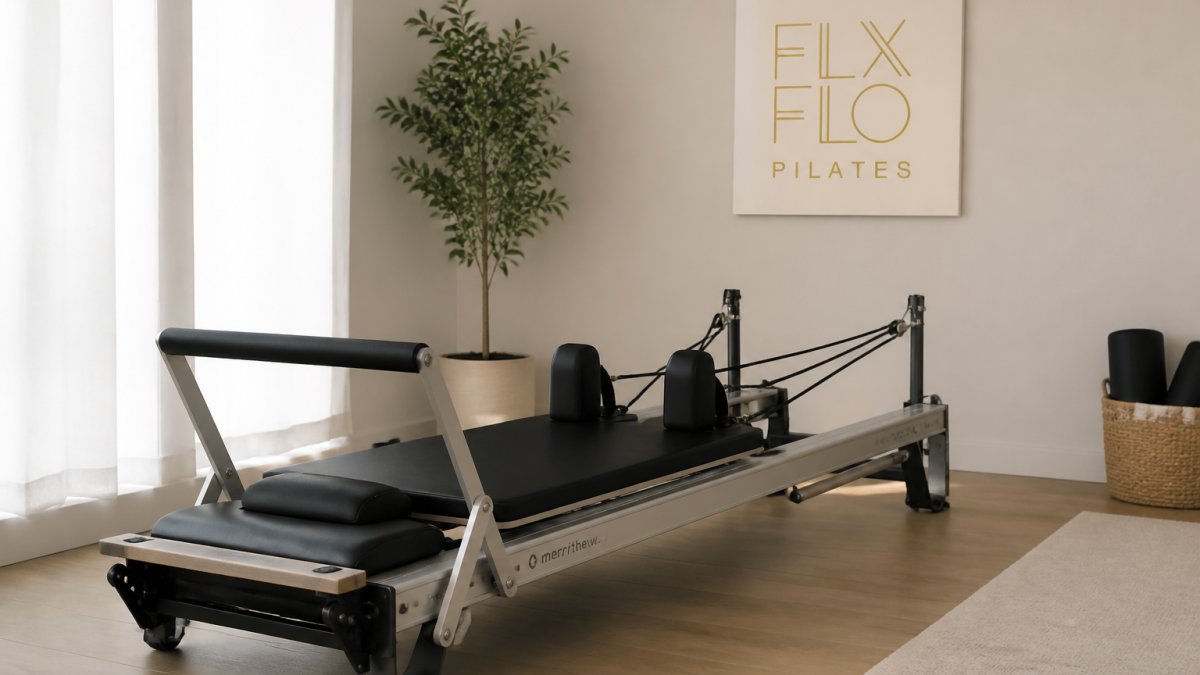
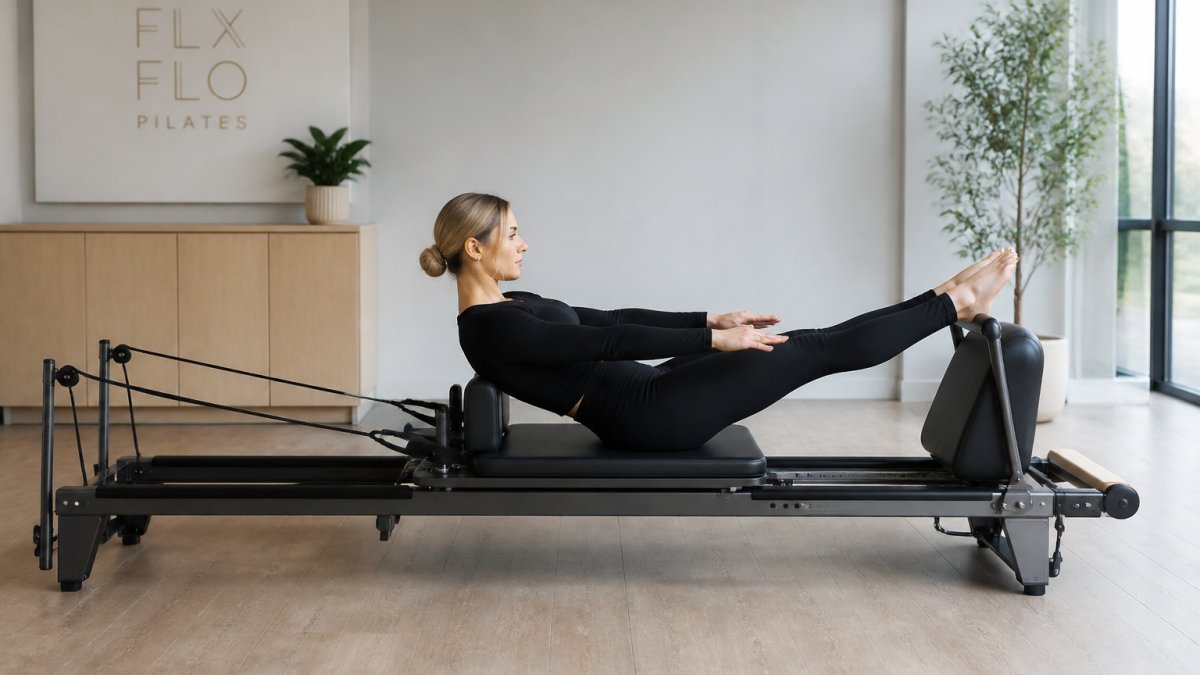
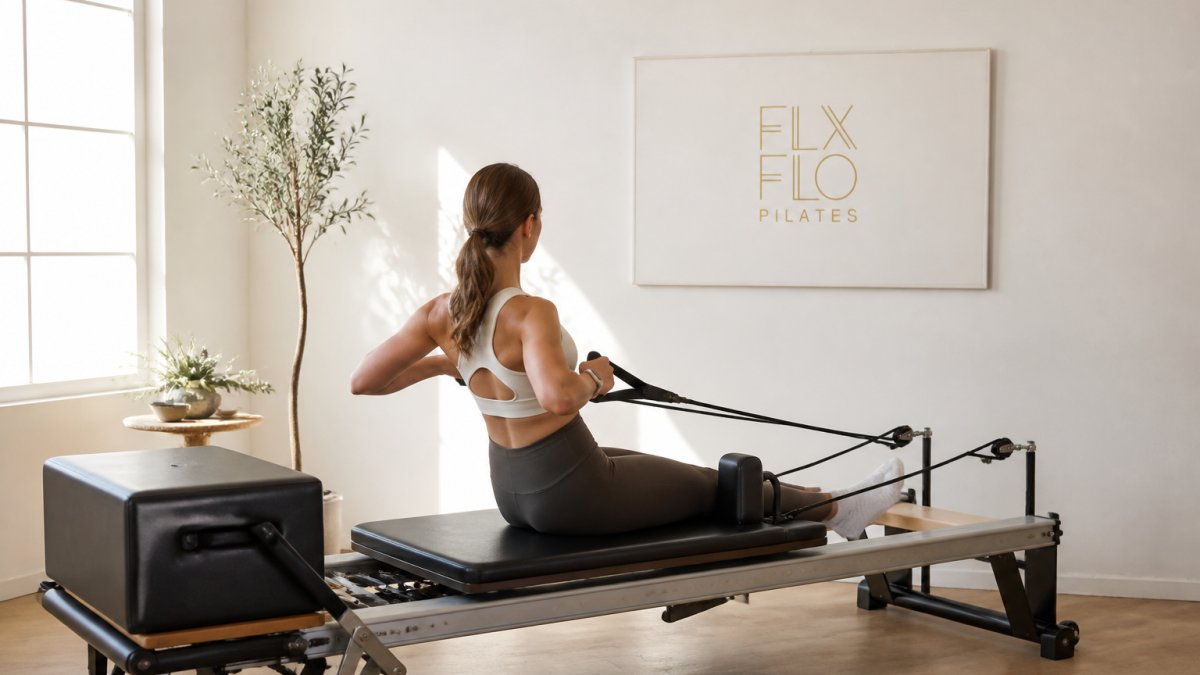
Reformer Pilates adds resistance and instability to mat work. The springs and moving carriage challenge your deep core in new ways.
Reformer exercises build core strength faster than mat Pilates for several reasons:
Spring resistance adds load to your stabilizers
The moving carriage forces your core to work harder to maintain stability
Equipment adjustments allow precise progression
The machine provides feedback through resistance
Common reformer exercises for core strength include:
Footwork series (builds foundation stability)
Leg springs work (challenges core during hip movement)
Chest expansion (engages core while opening your chest)
Standing core work (builds functional stability for daily movement)
Reformer Pilates is especially effective for people recovering from injury or managing limitations; the machine's support and adjustability make it accessible while still challenging your deep core.
At FLX FLO Pilates, our reformer classes are designed to build sustainable strength. Your instructor will adjust the machine and exercises to match your current level, whether you're rebuilding your foundation or elevating your performance.
How Often to Do Pilates for Core Strength
Consistency matters more than intensity. Your deep stabilizers respond best to regular, moderate practice.
Recommended practice frequency:
Beginners: 2-3 classes per week
Intermediate: 3-4 classes per week
Advanced: 4-5 classes per week plus supplemental home practice
Most people notice postural improvements within 4-6 weeks of consistent practice. Deep core strength continues to build over months and years.
Practice Level | Frequency | Timeline for Results | Best Approach |
Beginner | 2-3x/week | 4-6 weeks | Focus on form and breath |
Intermediate | 3-4x/week | 8-12 weeks | Mix mat and reformer work |
Advanced | 4-5x/week | Ongoing | Progressive challenges |
Rest days matter: muscles build strength during recovery, not exercise. Two rest days per week lets your body adapt and strengthen.
Key Takeaway Three classes per week is the sweet spot for most people building deep core strength. This frequency allows consistent practice without overtraining.
Measuring Your Progress: How to Know Deep Core Strength Is Improving
Deep core strength doesn't always show up in mirrors or scales. Progress is subtle and functional. Here's how to recognize it:
Postural Changes
Notice how you sit and stand. Do you feel taller? Does your posture feel effortless?
Reduced Back Discomfort
Many people have lower back discomfort from weak core stabilizers.
Improved Exercise Performance
Can you hold Pilates exercises longer without fatigue? Can you maintain proper form through more repetitions?
Better Daily Movement
Notice everyday activities: carrying groceries without lower back strain, sitting without slouching, standing longer without discomfort.
Increased Body Awareness
Over time you'll develop a stronger connection to your core, noticing when it's engaged and correcting slouching automatically.
Don't expect visible ab definition from Pilates alone.
What Pilates Can and Cannot Do for Core Strength
Pilates is highly effective for building deep core strength and functional stability. However, it has specific strengths and limitations.
What Pilates Does Well:
Builds deep core stabilizers and endurance
Improves postural alignment and body awareness
Enhances spinal support and reduces back discomfort
Develops controlled, functional movement patterns
Works well for injury recovery and mobility
Provides sustainable, low-impact strength
What Pilates Cannot Do:
Pilates alone won't create visible ab definition (that requires overall body composition changes)
It won't replace other forms of strength training if your goal is maximum muscle growth
It won't compensate for poor nutrition or lifestyle choices
It won't fix structural spine problems (those require medical evaluation)
It works best as part of a balanced fitness routine, not as your only exercise
Many people combine Pilates with other activities, resistance training for muscle growth, cardio for overall fitness.
At FLX FLO Pilates, we help you understand what Pilates can achieve for your specific goals.
The answer to "does pilates build deep core strength" is yes, when practiced consistently with proper form and intention.
Frequently Asked Questions
What is deep core strength, and how is it different from surface ab muscles?
Deep core strength refers to the stability and control of your innermost abdominal muscles, particularly the transverse abdominis and deep spinal stabilizers. Unlike surface abdominal muscles that create visible definition, deep core muscles support your spine, improve posture, and enable functional movement. Pilates specifically targets these stabilizers through controlled breathing and precise movement, building strength from the inside out rather than focusing on appearance.
How often should you do Pilates to build deep core strength?
Most practitioners see noticeable improvements in core strength and stability with 2-3 Pilates sessions per week, combined with consistent practice. Beginners may benefit from starting with 1-2 sessions weekly while learning proper form and breathing patterns. Consistency matters more than intensity, regular, mindful practice builds sustainable strength better than occasional intense sessions. Your instructor can recommend a frequency tailored to your goals and experience level.
Can you tell if you're engaging your deep core correctly during Pilates?
Yes. Proper deep core engagement feels like a gentle drawing inward and upward of your lower abdomen, not a hard clench. You should feel stability through your spine and pelvis rather than tension in your neck or shoulders. Your breathing remains steady and controlled. A qualified Pilates instructor can observe your alignment and provide real-time feedback on whether you're activating the right muscles. Over time, you develop body awareness that lets you sense correct engagement independently.
Is Pilates enough on its own to build a strong core, or do you need other training too?
Pilates builds deep core strength, stability, and functional movement very effectively. However, if your goal includes maximum muscle size or explosive strength, combining Pilates with other forms of strength training may accelerate results. For postural improvement, injury recovery, and sustainable functional strength, Pilates alone is highly effective. Your specific goals and any physical limitations should guide whether you combine it with other modalities. Discuss your objectives with an instructor to create the best approach for you.
Ready to experience how deep core strength transforms your movement and presence? At FLX FLO Pilates, we specialize in building sustainable strength through mindful, intentional practice. Our instructors understand how to engage your deep core, modify exercises for your body, and progress your practice over time. Book your first class and discover how moving smarter creates real, lasting strength.
Book Class